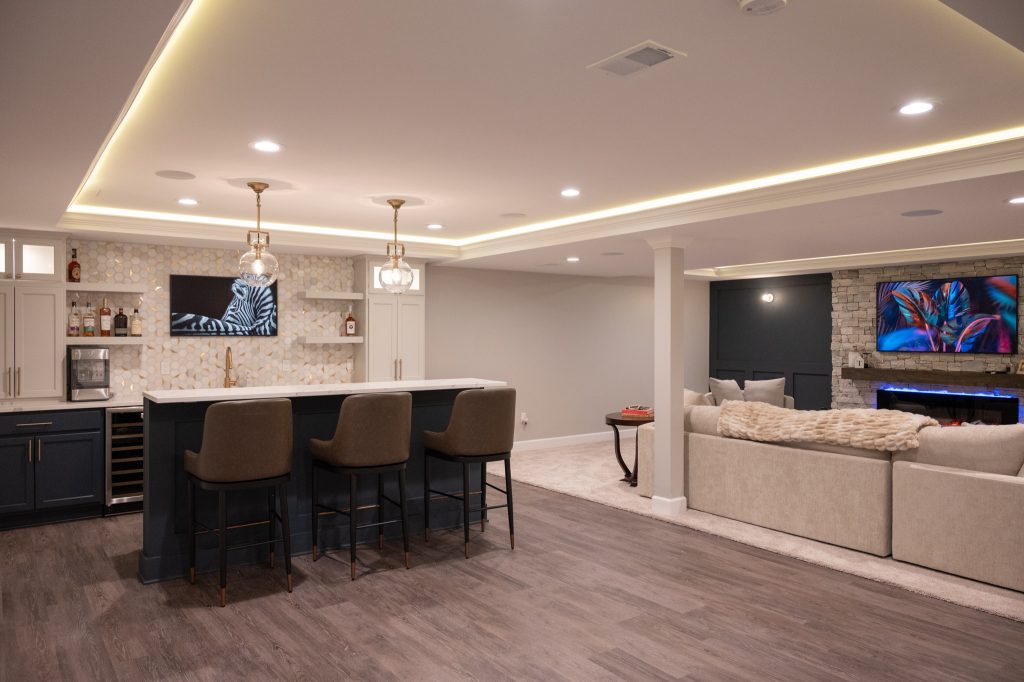
Get the finished basement of your dreams without breaking the bank with this 2024 finished basement cost guide for Michigan basements.
You are standing on untapped, concrete potential as you walk through your basement space. You start to imagine an entertainment space, guest room, and home gym in this space.
How much will all of this cost?
Our 2024 finished basement cost guide will help you determine the factors that affect the price of your remodeling project.
With a solid plan, you’ll be able to turn your cold, concrete basement into a warm, functional part of your home—without breaking the bank.
There are a few routes to tackle a basement update, from a finishing project to a full remodel. Deciding on the scope and project goals for your basement will help steer the budget conversations down the road.
Basement Finishing involves turning an unfinished basement into a usable, livable space by adding drywall, flooring, ceilings, light fixtures, and other essential elements such as insulation, heating, and plumbing fixtures. This is the most basic transformation and is typically less expensive.
Basement Renovation refers to upgrading an existing finished basement. This could involve modernizing outdated features, upgrading materials like flooring or finishes, or reconfiguring the space to better suit your needs, like creating a home office or entertainment area.
Basement Remodeling involves making structural changes, such as altering the layout, adding rooms, or reworking plumbing and electrical systems. This is the most extensive option and often the most expensive.
Once you’ve determined the type of project, you’ll be able to start crunching the numbers. For any construction project in Michigan, you’re looking at three overarching cost pillars: permits, labor, and materials.
Of course, more square footage and more extensive renovations translate to higher building costs. Larger areas are going to require more material and labor, and more extensive renovations can add to the permitting costs.
Before you even start your basement project, you need to consider the project’s legalities. No matter where you are, you will need to obtain building permits before you can start any remodeling projects.
While there’s limited data on average permitting fees in Michigan, some Michigan cities are known to have more involved or restrictive permitting processes, which can add time and cost to your project.
The City of Detroit has comprehensive building and safety codes, particularly for historic districts and major renos. The city has been focusing on revitalization efforts, which often involve strict compliance with building standards.
Ann Arbor is known for its strict building codes and environmental standards, particularly regarding energy efficiency and sustainability. The city often requires detailed inspections and approvals, especially for projects in historic homes and environmentally sensitive areas.
Birmingham has a reputation for strict building codes and aesthetic guidelines due to its focus on preserving the city’s upscale character and the architectural interest of its buildings.
Bloomfield Hills has rigorous building codes, especially for new homes or significant remodels. Permits for large homes or unique architectural designs often involve more scrutiny and longer approval processes.
Grosse Pointe, known for its historic homes and strict zoning ordinances, has one of the more involved building permitting processes in Michigan. Homeowners and builders often need to meet high standards for materials and design.
The national average for building permits is around $1,259.
While the permitting process can be a pain, it’s advisable to bite the bullet and keep everything above board. The last thing you want is to be halfway through your project and have to worry about an inspector coming or, worse, having to pay a fine!
It’s worth taking a few minutes to research permitting in your area—or, better yet, consulting a contractor. They’ll assess the scope of your project and give you an idea of the permitting costs involved. A few minutes of research plus a phone call could save you a headache down the line.
Finishing a basement typically requires skilled labor. Even if you DIY your basement remodel, plumbing, and electrical work will require an expert who can ensure your new living space is up to code.
You may also want to hire a general contractor—someone who helps coordinate the entire project—which would add between 10%-25% to the total project cost.
While you may have less control over labor and permitting costs, the materials you choose can significantly influence your budget. Opting for high-end finishes, such as premium flooring or custom cabinetry, will drive up costs, whereas choosing more budget-friendly options like standard drywall or laminate flooring can help keep expenses down.
Note, however, that cheaper materials often amount to higher long-term costs due to increased maintenance, repairs, or replacements over time. Instead, it may be worth biting the bullet and investing in quality materials upfront to help ensure longevity.
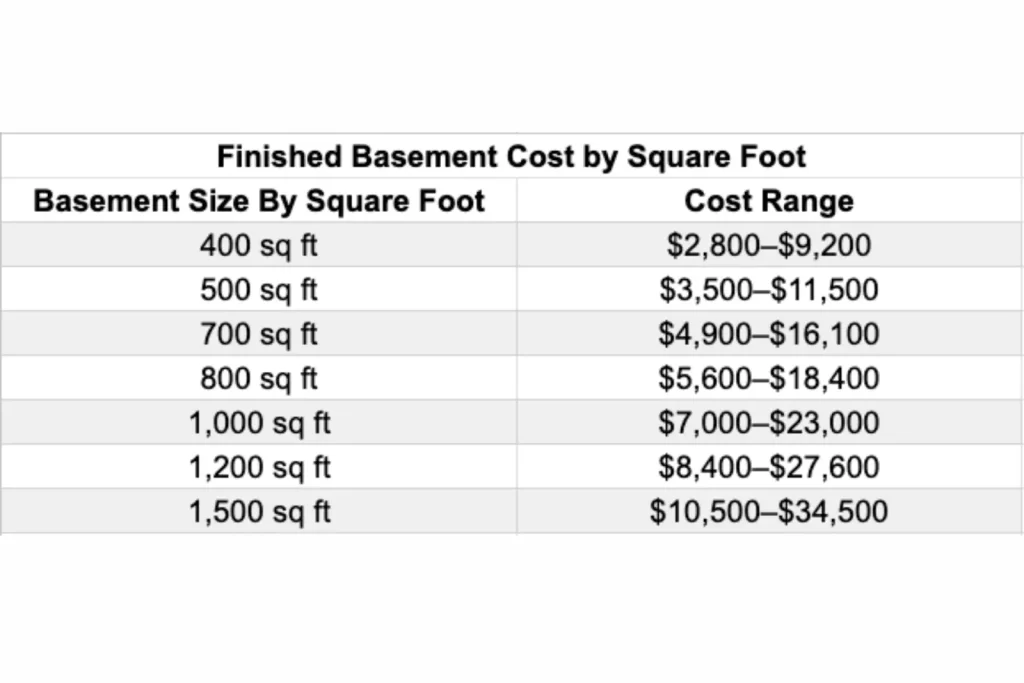
This chart uses a range of $7 to $23 per square foot.
The next thing you get to look into is the building part. From waterproofing to insulation, walling, flooring, and ceiling, you will want to choose the best materials possible, and hire the craftsmen to help bring your dream to life.
Here is a guide to the costs you will want to budget for.
Ceiling costs include the material cost for insulation as well as the material for the ceiling itself. If you add a drop ceiling to hide the pipes, wires, and ductwork, you’re averaging between $2-$6 per square foot.
Drywall costs about $2 per square foot. This means, depending on your basement size, you’re looking at a range between $800 for 400 square feet or up to $3,000 for 1500 square feet.
Flooring can vary in price because the cost will rely heavily on the chosen material. Laminate and carpet are the most budget-conscious choices, coming in at $3-$11 per square foot, while hardwood flooring can cost up to $22 per square foot.
The good news is that most basements already have plumbing routed to them, so if you don’t need to reroute many lines, your costs will automatically be lower.
However, if you need to add pipes for a bathroom or kitchen, or install a new drainage system, you’re looking at a larger investment. Licensed plumbers can charge between $45-$200 per hour in Michigan.
Depending on the type of wiring you are adding to your basement, the cost will vary. You can expect to pay a licensed electrician between $50-$100 per hour. If your home needs a new electrical panel to handle the additional lighting load, the cost will also be significantly higher.
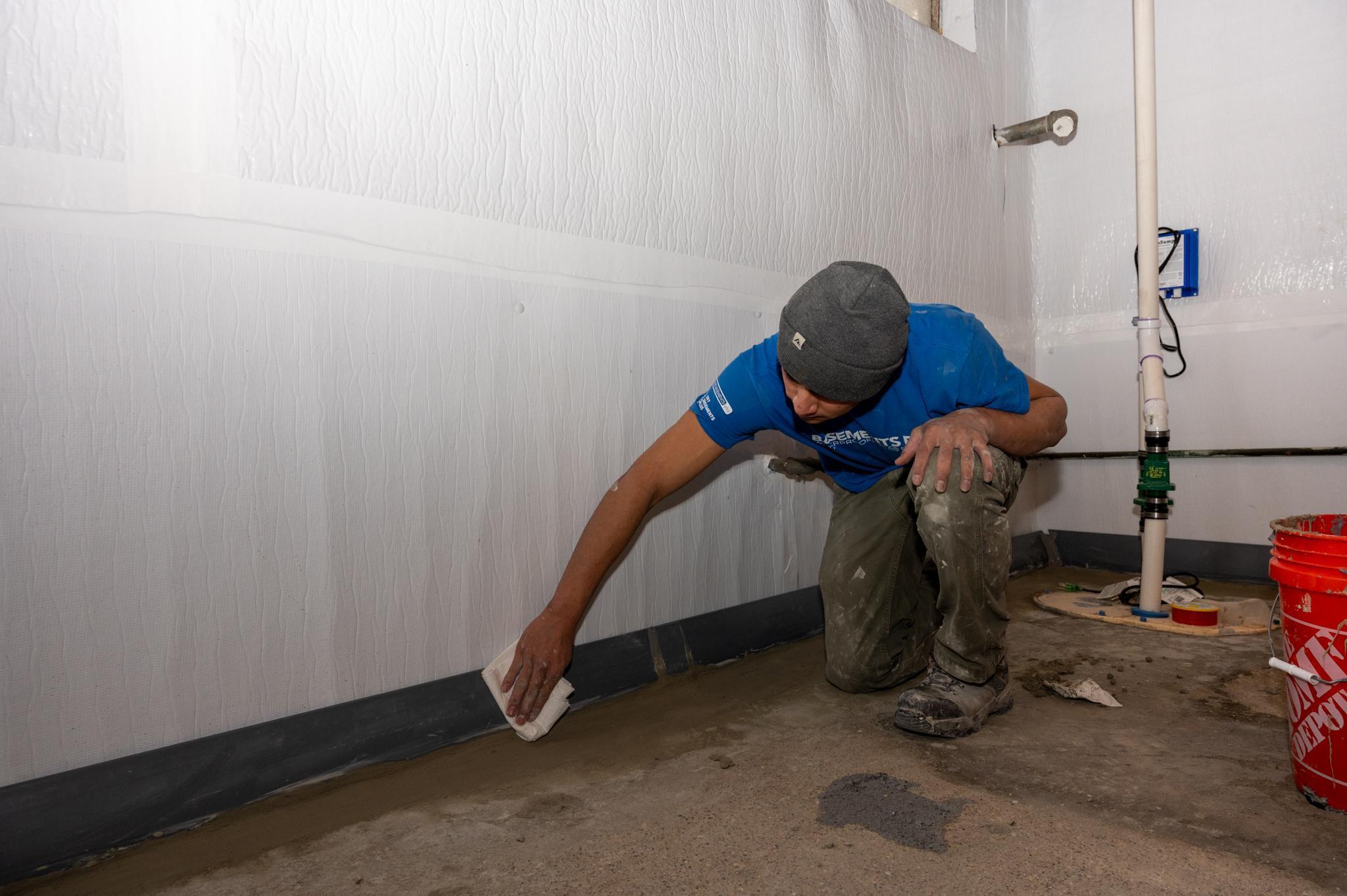
You don’t start building a house by looking at the decor first (at least we hope you don’t). You have to start with your foundation. And when finishing a basement, protecting against water damage is imperative. Your floors, walls, and even your ceiling are essential for remodeling your basement.
It’s important to set your basement finishing project up for success by making your basement waterproof. This requires a process called encapsulation as well as assessing the foundation for cracks or leaks that would require foundation repair.
It’s also a good idea to install a sump pump for your basement in case you experience any water flooding due to weather. Water damage is one of the biggest costs associated with having a finished basement, and waterproofing can be essential for protecting your investment—so prepare early by waterproofing your basement.
If you want to add an extra bedroom to your finished basement, you’ll need to add an egress window. Egress windows are required by law in many jurisdictions and must meet specific size and installation requirements to ensure they function properly in an emergency.
If your basement is below grade, adding a window may mean excavating and shoring up a window well, which could range from $2650 up to $6,000 or more.
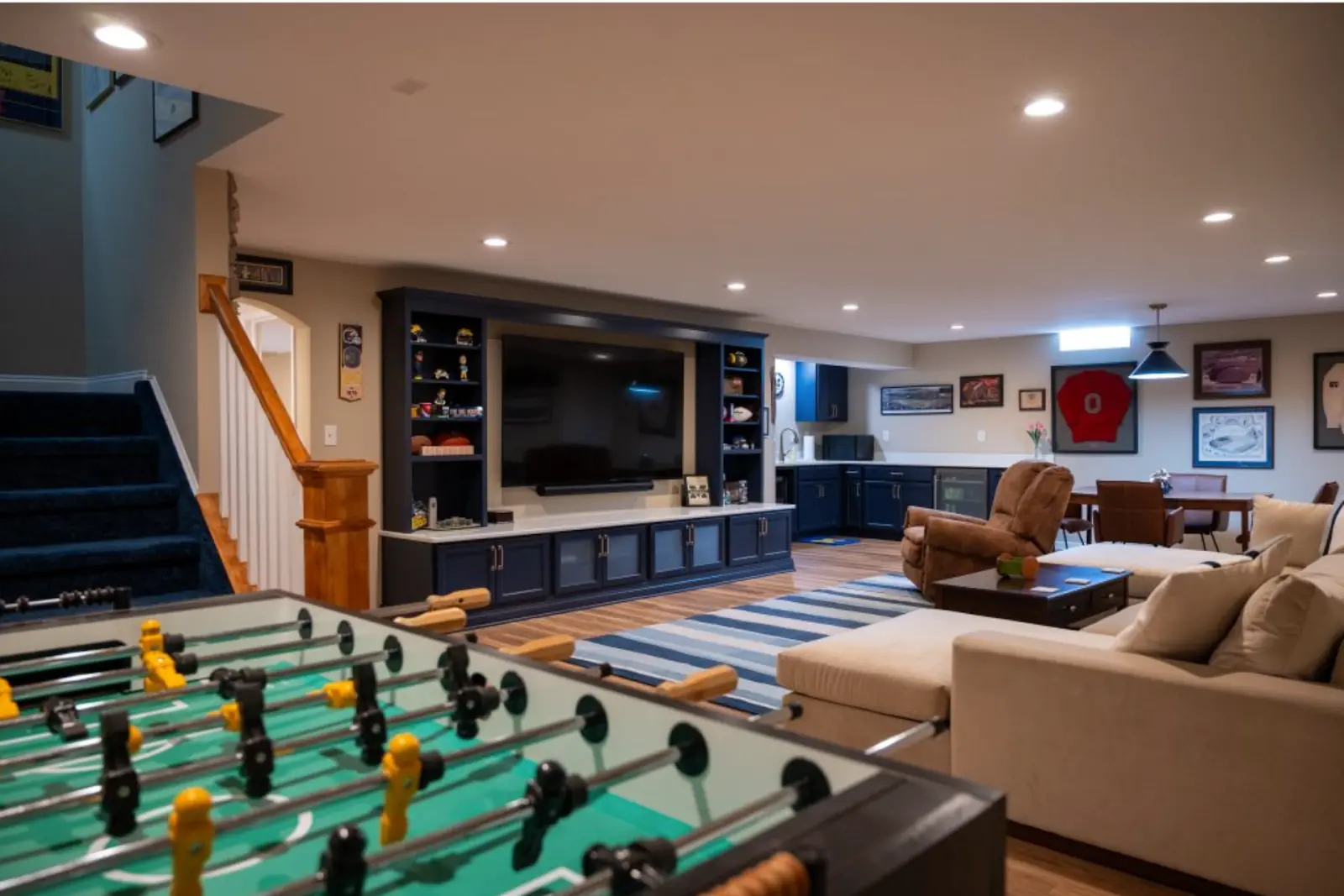
Once you’ve completed the construction portion of the basement remodel, it’s important to think about how you want to design the space. If you’ve always dreamed of hosting your kid’s birthday parties down there, it might be fun to invest in a foosball table ($650) or a pool table ($2,800).
If you were planning to entertain your adult friends, you might add a wet bar ($8,000) or a home theater ($17,000). These are additional costs to keep in mind that go beyond the construction scope of finishing your basement.
The next thing you want to consider regarding the cost to finish your basement is labor: Do you need to hire a contractor, or can you strap on that tool belt and go the DIY route?
Just remember there are pros and cons to each. With a basement contractor, you will have to get a few estimates and look at testimonials to get a sense of their work.
With the DIY route, you could save a lot of money; however, a simple mistake can lead to higher costs down the road, and, unless you have considerable experience, taking on a major construction project can mean biting off more than you can chew..
Michigan law requires plumbing and electrical to be completed by a licensed professional, and, unless you’re familiar with state building codes and experienced in construction work, it’s advisable to hire a contractor for any structural or HVAC work. This ensures that work is up-to-code, protecting you and your family.
Contractors will complete the work quickly and neatly and will have the proper knowledge of permits, building codes, and best practices to make sure your project is on track and safe.
While the core construction of your finished basement project should be completed by a professional, a DIYer could certainly take on the finishing tasks. Painting and installing simple flooring, trim, and tiling as well as decorating and furnishing are all DIY-friendly jobs.
Just remember—a full basement remodel can take the pros up to 45 days to complete. Imagine how long it could take you!

If you’re trying to create your dream basement on a budget, here are a few quick tips on how to lower project costs:
Yes, finishing a basement can increase your home’s resale value. On average, you can expect a return on investment (ROI) of 86% from a basement renovation, depending on your location and the quality of the finish.
Yes, you can finish a seven-foot-high basement. However, you’ll need to ensure that the ceiling height meets local building codes, which typically require a minimum height of 6’8” for habitable spaces. You may need to get creative with ceiling ideas—like paint rather than drop ceiling.
The cost to finish a staircase can range from $500 to $3,000, depending on materials, labor, and design complexity.
Yes, finishing a basement yourself is cheaper, as you can save on labor costs. However, it requires significant time, skills, and knowledge. For electrical and plumbing work, however, Michigan law requires a license.
Even in cases where it’s legal, such as with structural work, you can save yourself a headache and minimize the chance of costly mistakes when you hire professionals.
The most expensive part of finishing a basement is usually the installation of electrical and plumbing systems, especially if they need to be rerouted or upgraded.
YES! Finishing your basement has an excellent return on investment. Even if you decide to finish your basement simply for storage, you are adding resale value to your home.
Nationwide, the average cost to finish a basement starts around $30,000 and could cost over $200,000, according to Forbes. While there is no good state-specific data for Michigan, the relatively low cost of labor and materials in the Wolverine State is good news for homeowners looking to finish a basement. To get a free project estimate, consult Basement Finishing Pros.
Ready to turn your basement into a stunning, functional space? At Basement Plus, we specialize in turning your vision into reality—whether it’s a cozy family room, sleek home gym, or stylish entertainment area.
Our team of experts makes finishing a basement a seamless, stress-free renovation from start to finish. Book your free consultation today, and let’s start creating the basement of your dreams.

Finish Now & Pay Later! (cannot be combined with any other offers)
Limited time offer – Enjoy your lower level without the stress of paying right away.
