

Signs Your Sump Pump Is Failing Before the Next Storm
The signs your sump pump is failing are rarely dramatic: no alarm, no obvious breakdown, just a system quietly losing ground until a real storm exposes it. A pump can run continuously right up to the moment your basement floods and give you no clear warning before the water is already on the floor. This post walks through exactly what to listen and look for so you can catch a problem while there’s still time to act, not at 2am when the damage is already done.
Why Does a Failing Pump Turn a Storm into a Flood?
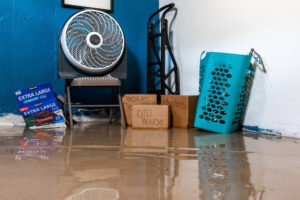 During heavy rain, your sump pump may cycle continuously for hours and far harder than it works on a dry week. That’s when a quiet weakness becomes a real failure. A pump limping along for months can hit its limit the moment a serious storm demands something of it, and once it falls behind, water rises fast. By the time you notice, you’re dealing with wet drywall, ruined flooring, and mold that can start growing within 24 to 48 hours. The materials, the number of pumps, and whether a real backup exists all determine how a system performs in a serious storm versus a light rain.
Avoid a flood after the next storm. Call today for a FREE inspection!

Is Your Sump Pump Running But Not Actually Moving Water?
The Motor Is Running But Nothing Is Discharging
The most deceptive sign is also the easiest to miss. The pump sounds like it’s working, you can hear it humming but no water is actually moving outside. That usually points to a clogged intake screen, a jammed impeller, or a discharge line that’s frozen, blocked, or disconnected somewhere between the pump and its exit point. From inside the house, it sounds completely normal. The pump is trying. It just can’t move water anywhere.
Unusual Noises During Cycling
A healthy pump has a consistent sound: a hum on startup, some water movement, then quiet. Grinding, rattling, gurgling, or a loud clunk on every cycle usually means something inside has shifted or worn down. It could be a failing bearing, a loose component, or debris caught in the impeller. If your sump pump is making these types of sounds, sump pump maintenance can help determine if you need a cleaning or pump replacement.
Visible Rust, Corrosion, or Age
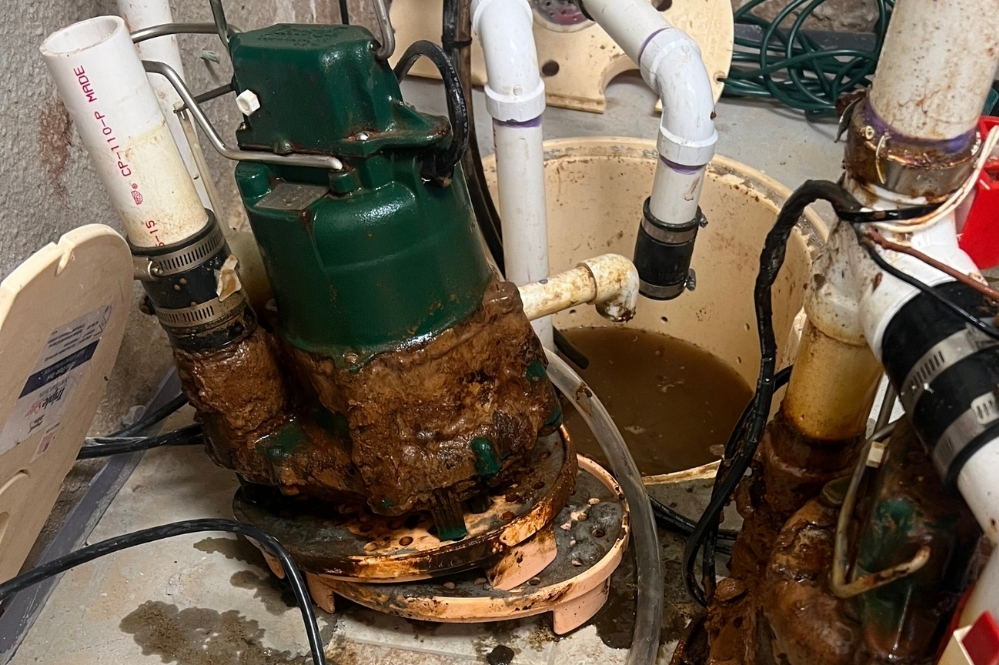
Take a look at the pump housing, fittings, and check valve. Rust means moisture has been sitting somewhere it shouldn’t, or the unit is aging out. Standard hardware-store plastic pumps hold up for a while, but cast iron pumps are built to handle constant moisture and heat without breaking down over time the way lower-grade materials do. We’ve inspected thousands of basements across Southeast Michigan, and visible corrosion is one of the most consistent signs we see just before a flood.
What Does a Stuck Float Switch or Short Cycling Mean?
The float switch is what tells your sump pump when to turn on. If it’s caught on the side of the pit, tangled in the cord, or coated in sediment, it can’t rise and fall the way it needs to, which means your pump might not turn on at all when water starts coming in, even though it looks perfectly fine sitting there.
Frequent, short cycling is another sign worth watching for, especially if your pump is turning on and off every minute or two during nothing more than a light rain. That can mean the check valve is failing and letting water flow back into the pit, or the pump is simply being asked to handle more water than it’s built for on its own. A single pump working alone has to manage every gallon that comes in by itself, which is why some systems are designed with a second pump that shares the load during heavy volume.
When the Pump Isn't the Whole Story
Sometimes a pump working perfectly still isn’t enough, and water gets in anyway. If that’s happening in your home, the sump pump was probably never the entire problem to begin with. The full system — drainage, grading, wall condition — is worth having looked at, not just the pump.
What to Do Before the Next Storm
Don’t wait for the flood!
(1) Run through the warning signs above today
(2) Call for a free inspection if you spotted any of them
(3) Get a specific recommendation before committing to any repair or replacement
If you noticed even one of these signs, it’s worth having your system looked at now, while there’s still time to act. A quick inspection can tell you whether you’re dealing with something simple, like a stuck float, or something bigger.
Picture the next storm rolling through and you’re not checking the basement every twenty minutes. The power flickers and the pump keeps running anyway. You wake up the next morning to a dry floor instead of a flooded one. That’s what a properly working, properly backed up system buys you: one less thing to worry about when the sky turns dark.
We install the TripleSafe® Sump Pump System, which pairs a primary and secondary pump with a battery powered backup, and we’ll walk you through what your basement actually needs before you spend a dollar. Schedule an inspection before the next storm hits.
See how your sump pump is running. Schedule your annual maintenance today!

Topics:
