What Materials Should I Build My Basement Walls With?
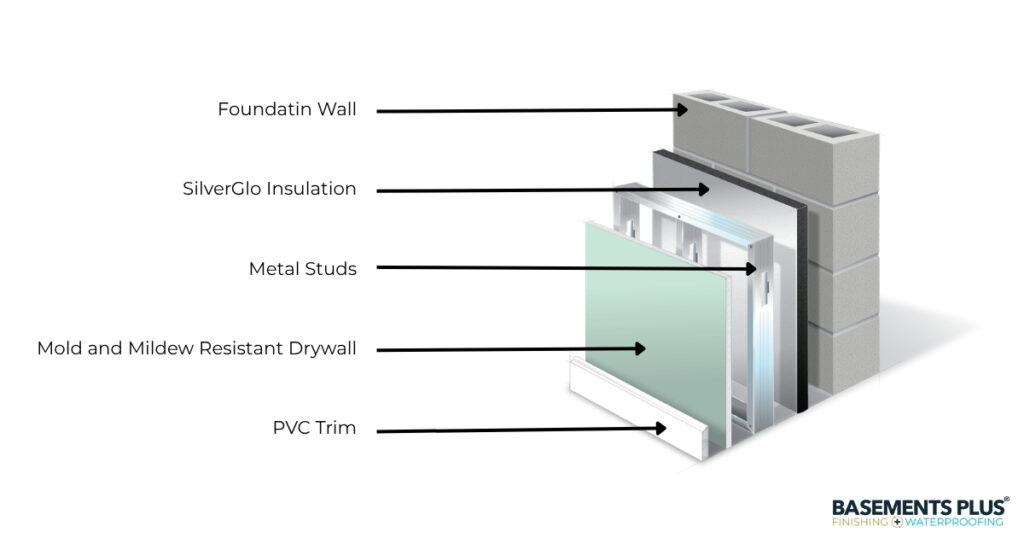
The materials you use to finishing your basement should be engineered for below grade spaces – metal studs, graphite infused insulation (SilverGlo), and mold resistant drywall. If you’ve gotten a few finishing quotes and wonder why the numbers are so different, then look at the type of materials that contractor is suggesting.
A traditional contractor could quote you with wood studs, fiberglass insulation, and even regular drywall. Over the years, we have learned that these are all the wrong materials to use. That’s why we switched to non-organic materials.
Non-organic materials like the ones we use will cost more upfront. However, the alternative can cost you much more down the road. Wood studs and fiberglass insulation easily trap moisture, and regular drywall gives mold a surface to grow on. Over time, musty smells will develop and decline the air quality in your home, which may ultimately affect your health. Paying more for the right materials is the difference between finishing your basement once or having to redo any work because the wrong materials were used. Over time, that can mean a healthier space for you and your family to make memories in.
Here’s what goes into a Basements Plus Wall System. So, when it comes time to decide on a contractor, you can make the best decision for you and your family.
Watch Steve Explain the Basement Wall System
What Goes Into Our Basement Wall System:
SilverGlo Insulation
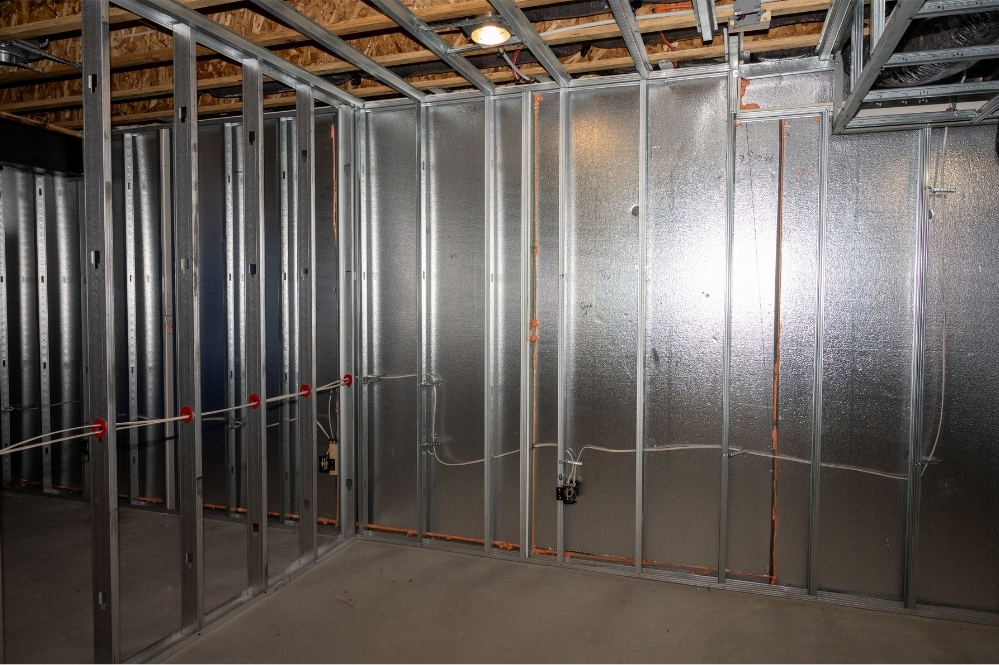
The first layer installed is our continuous basement insulation called SilverGlo. This is a graphite-infused rigid panel with a built-in radiant barrier. It is installed continuously behind the metal studs, not tucked in between them leaving room for airflow.
Why continuous insulation matters:
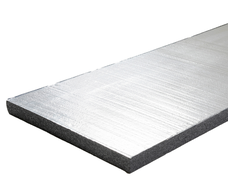 • No gaps at the studs, so temperature stays consistent across the entire wall.
• Holds a high R-value, keeping your basement warmer in winter and cooler in summer.
• Engineered for below-grade environments where traditional materials fail over time.
R-Value measures how well a material resists heat flow. The higher the R-value, the better it insulates.
Metal Studs
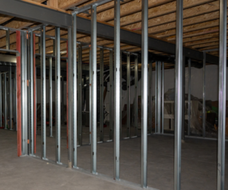
After the insulation is in place, we add the basement wall framing in front of the SilverGlo using metal studs.
Why metal studs matter:
• Engineered for below-grade spaces like basements.
• Does not absorb moisture from high humidity levels or flooding.
• Does not support mold growth they way wood stud framing can.
Mold-Resistant Drywall
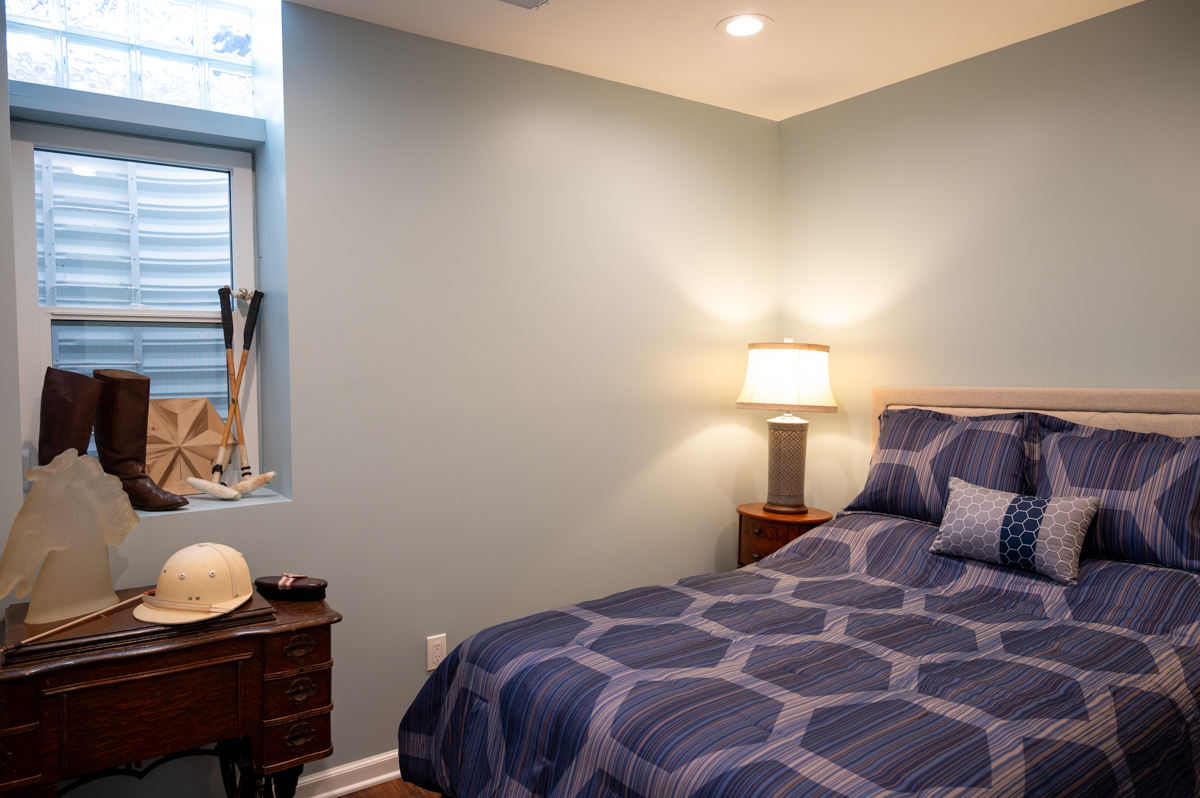
Next is the mold resistant basement drywall. It looks identical to standard drywall used in the rest of your home once it’s painted. This is a detail that can be easily switched without you noticing.
Why mold-resistant drywall matters:
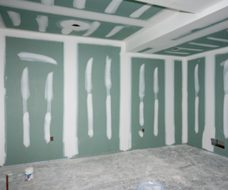
• Designed to deny a surface mold can colonize on.
• Looks and finished the same way standard drywall does after its painted.
PVC Trim
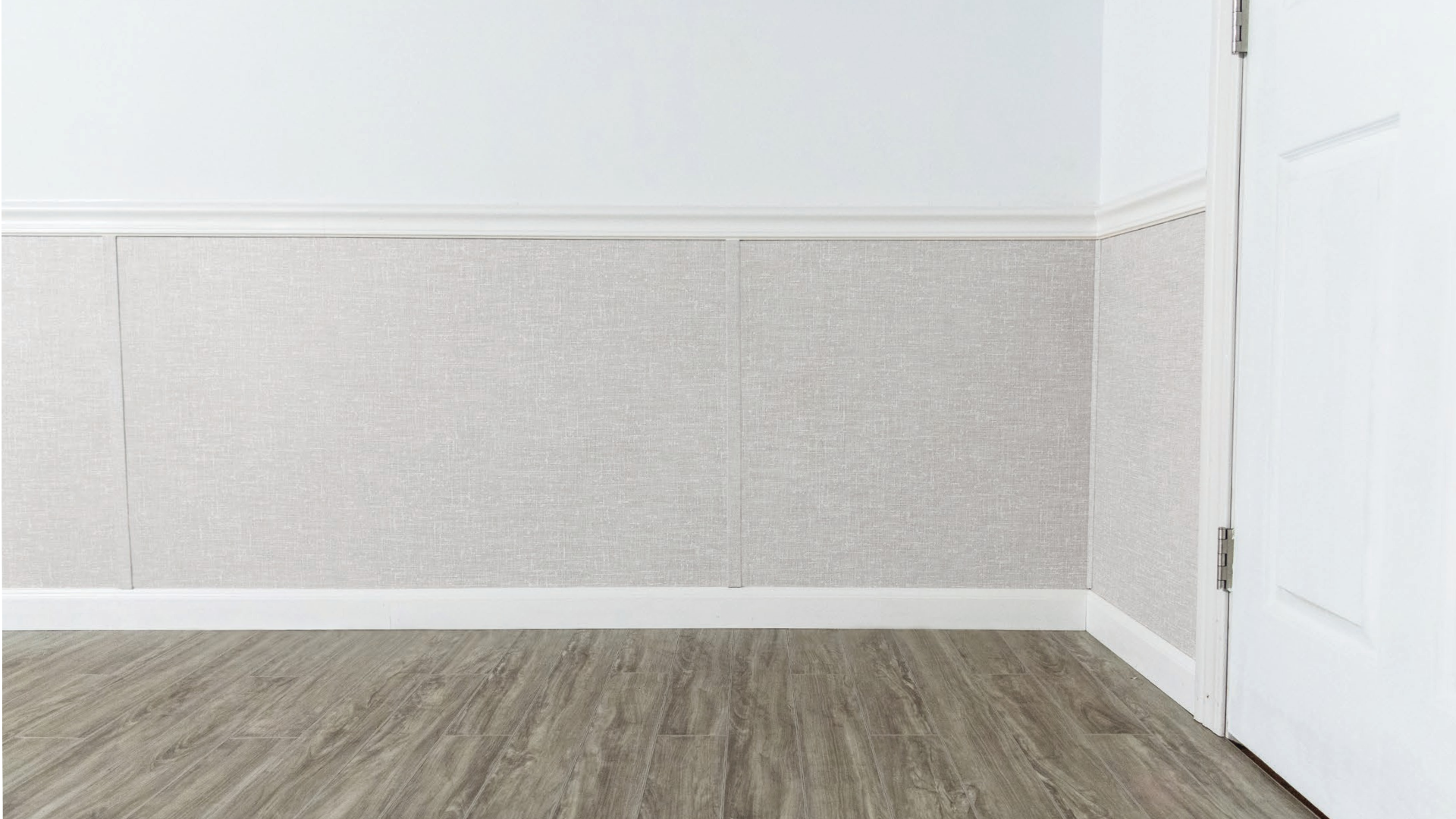
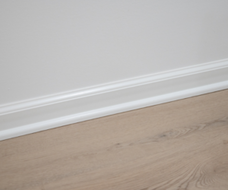
The final touch is adding PVC trim. This is more than just a cosmetic piece. Building the rest of the wall system with moisture resistant materials then finishing with wood trim will only undermine everything else in place.
Why PVC matters:
• Non-organic, so it does not feed mold growth the way wood does.
• Completes the room the same finishing appearance wood trim does.
What This Means When Comparing Quotes
This isn’t about comparing the cheapest quote. It’s about using the correct materials in the right places. Basements naturally deal with moisture and humidity in ways the rest of the house doesn’t. Materials that don’t become a breeding ground for mold will carry more value than most Southeast Michigan homeowners realize. They are protecting your home and family, and they will cost more for that reason.
Continuous insulation, metal studs, mold-resistant drywall, and PVC trim solve a specific problem. The price differences between two basement finishing costs will come down to these four decisions.
What to Ask Your Contractor
Whether you hire Basements Plus or another contractor, here are questions worth asking before signing any contracts:
1. Is the insulation continuous across the wall, or only between the studs?
2. Do you use metal or wood studs?
3. Will the drywall be mold-resistant, or standard drywall?
4. Is the trim material PVC, or a wood-based?
5. What happens to this wall if there is a flood or humidity issues?
Pro Tip: A lower quote isn’t automatically a worse one, but you should make sure it comes with straight forward answers without any hesitation. Don’t settle for a contractor that can’t tell you exactly what’s going behind the wall.
The price difference between basement finishing quotes almost always comes down to these four decisions, made one at a time. We’d rather walk you through them than have you find out the hard way.
Schedule a FREE consultation to learn how our basement wall system makes sense for your basement!

Topics: